


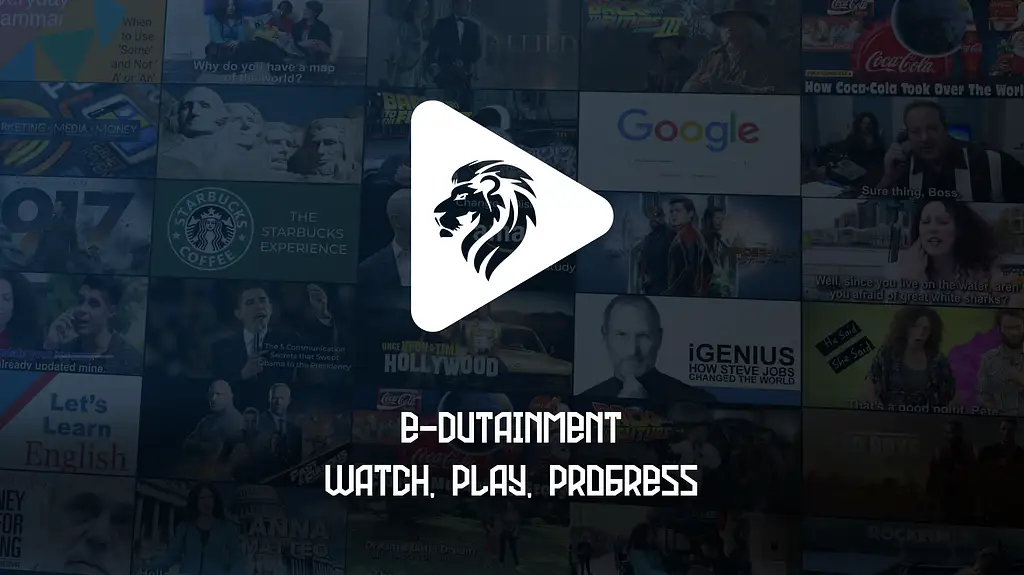
e-dutainment: the method for learning English by watching films.
What if the best way to master English were to watch the films and series you already enjoy? That is what the e-dutainment application does: it turns learning English into something you look forward to, through cinema. With our immersive method, you finally build real English and progress at your own pace.
Three audiences, one method
An English programme for every situation
Whether you are funding your own certification, training a whole team or a full cohort of students, the method does not change: you learn English through films and series, not through conjugation tables.
INDIVIDUALS
Fund your own certification
A certifying English programme, built around your professional project and your starting level.
TOEIC or English 360 certification
Funding routes explained for your situation
A dedicated trainer throughout
COMPANIES
Move your teams forward in professional English
A tailor-made in-house programme, with content aligned to your teams’ work and your real deadlines.
Programme built around your core activities
Corporate funding arrangements available
Qualiopi-certified organisation
SCHOOLS & TRAINING CENTRES
An introduction to English your students actually finish
Learning through films and series in their original version: a format learners complete instead of abandoning.
Content aligned to CEFR levels
More than 10,000 teaching videos
Supports entry into working life
Forget English lessons. Try a method grounded in linguistics.
Traditional methods often fail because they are boring, and people give up. Our approach draws on cognitive science and linguistics to hold attention instead. It turns films and series into interactive teaching videos — and it is those videos, which drive memorisation and active listening, that make the learning work. e-dutainment covers the full range of language skills, delivered as play rather than as drill.
What the method gives you
Learning English should be neither complicated nor frustrating. With the e-dutainment method you progress naturally, without pressure, through an approach that puts enjoyment and simplicity at the centre. Here is what makes it work, even from a standing start.
Learn without stress, with material you actually want to watch
Instead of complex rules and school exercises, you meet English in a living environment: films, series, everyday scenes, real dialogue. You retain more because you see English in situation, you grasp meaning naturally, and you stay involved. The result is faster progress without the feeling of working.
Visible progress within the first weeks
Whether you are a beginner or already comfortable, the programme adapts to your level, your objectives and your pace. Exercises are short, targeted and built to improve your listening comprehension, widen the vocabulary you actually need, and develop conversational reflexes. You advance step by step, on a pathway that avoids overload and shows you clearly where you have moved.
You are never alone in this
Our team follows you from beginning to end — to guide you, answer your questions and adjust the pathway if it needs adjusting. On the practical side, we set out the funding arrangements that apply in your situation and country, so you can concentrate on one thing only: making progress.
Why the method works
You learn in situations that resemble real life. Instead of school exercises, you meet English in films, series, everyday scenes and natural dialogue. It is concrete, it stays with you, and it is far more motivating.
You are not forcing yourself, so you move faster. What we enjoy, we retain. The e-dutainment method turns English into something worth doing rather than something to get through.
You go at your own pace, with real support. Beginner, intermediate or already fluent, the pathway adapts. You always know what to do next, and why.
You see progress quickly. Short exercises, realistic scenarios and intelligent repetition mean the difference is noticeable after a few weeks.
We handle the practical side. We tell you which funding routes exist for your situation and walk you through the paperwork.
Your pathway to learning English
Our programmes in three stages. No complexity: your progress is legible from the start.
01.
Assess your real level.
As soon as you log in, a full placement test establishes your starting level against the six CEFR bands.
02.
Start your tailored pathway.
Each user is then guided into a fully personalised programme, targeting exactly what you need in grammar, listening comprehension and professional English.
03.
Learn, then certify what you can do.
Get access to thousands of exclusive learning items, then validate your English with a recognised certification such as the TOEIC or English 360.
Our partners: a network built around professional training.
We work with networks of schools (including the IGS group, now IGENSIA), universities, apprentice training centres, companies building their training plans, and employment-support organisations — so that our programmes reach every kind of learner.
+ 30 500
+ 10 000
1
e-dutainment rests on solid trust and demonstrated results.
Direct partnerships with Hollywood studios
Marmignon Brothers works directly with Sony, MGM, Universal and Paramount to use their catalogues for English teaching — a set of agreements that very few training organisations hold.
Results you can point to
More than 50,000 users since 2017. The e-dutainment platform holds more than 10,000 films, series and teaching videos.
They followed an English programme — read what they say
They trust us















FAQ — English training with e-dutainment
Why is English training a strategic investment?
What is e-dutainment?
How can my English programme be funded?
Do you offer certifying English programmes?
Does the programme work at every level?
What do you actually get from an e-dutainment programme?
✓ Gamified modules
✓ Individual progress tracking
✓ A recognised certification at the end
✓ In-house delivery for companies
✓ Suited to adults, jobseekers, employees and students
What kind of content is included?
Is the programme certifying?
How do I start an English programme with e-dutainment?
Can the programme be followed remotely?
Is taking the certification compulsory?
What are the steps to get started?
Who is the e-dutainment English programme for?
Do the programmes lead to a diploma?
What formats are available?
✔ Continuing education
✔ Adult training
✔ In-house corporate delivery
✔ Individual pathway with support